 ODM Daily Inspirational Devotional Messages Bible Verse and Prayers ODM
From Élysée Palace to La Santé Prison: The Historic Fall of Nicolas Sarkozy and Why a French President Can End Up Behind Bars
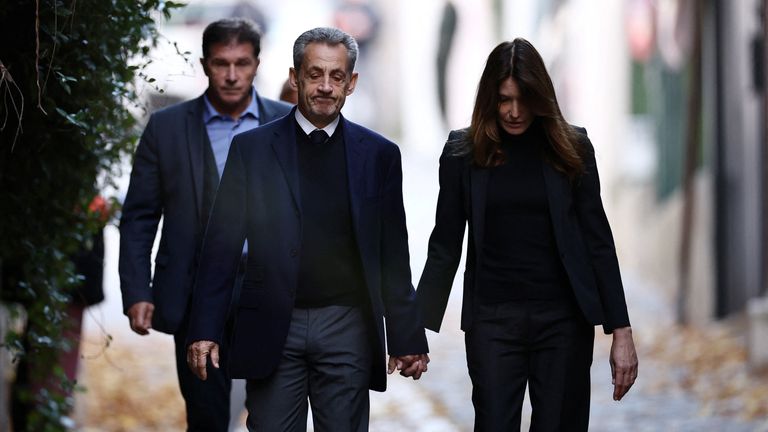
October 21, 2025 – In a scene that once seemed unthinkable, France’s former President Nicolas Sarkozy stepped through the iron gates of Paris’s infamous La Santé prison today, marking the start of a five-year sentence for criminal conspiracy.
The man who once commanded the nation’s highest office, promising to “clean up” French politics with his “Kärcher” (pressure washer) rhetoric, now faces the stark reality of incarceration. This isn’t just a personal downfall—it’s a seismic moment for French democracy, testing the limits of accountability for the powerful.
But how did we get here? And crucially, how is this even possible in a country where presidents have long been seen as untouchable? In this deep dive, we’ll unpack the Libya financing scandal that ensnared Sarkozy, trace the tortuous legal path to his cell, and explore the French system’s unyielding commitment to the rule of law. Buckle up—this is the story of justice catching up to power.
The Scandal at the Heart: Illegal Campaign Funds from Gaddafi’s Libya
It all traces back to 2007, when Sarkozy stunned the world by winning France’s presidency on a wave of charisma and conservative fervor. But whispers of shady dealings soon emerged. Prosecutors alleged that Sarkozy’s campaign was secretly bankrolled by Libya’s dictator, Muammar Gaddafi, to the tune of €50 million—far exceeding legal limits and violating France’s strict campaign finance laws.
- The Allegations: In exchange for the funds, Sarkozy reportedly promised Gaddafi favorable treatment, including business deals and political support. This wasn’t pocket change; it was a covert operation involving suitcases of cash smuggled into France, laundered through opaque channels.
- The Trigger: The scandal exploded after Gaddafi’s 2011 ouster and death, when Libyan officials began spilling secrets. A 2012 investigative report by Mediapart detailed wiretapped conversations implicating Sarkozy and his inner circle.
-
Sarkozy’s Defense: He has vehemently denied it all, calling the charges a “grotesque fabrication” and a politically motivated witch hunt. In a poignant X post just hours before entering prison, he wrote: “I am not an innocent former President of the Republic being locked up this morning; I am an innocent.”
(Translation and emphasis ours.)
This wasn’t Sarkozy’s first brush with the law. He faced separate convictions for corruption and influence-peddling in 2021 (related to trying to bribe a judge), earning a three-year sentence he served under house arrest with an ankle monitor. But the Libya case? That’s the big one—a direct assault on the integrity of French elections.
The Legal Marathon: From Indictment to Iron Bars
France’s judicial system is no rubber stamp. It’s a labyrinth of investigations, trials, and appeals designed to ensure fairness—especially for high-profile figures. Here’s the timeline that led to today’s gates slamming shut:
- 2013: The Investigation Begins – French magistrates open a probe into illegal financing of Sarkozy’s 2007 campaign, focusing on Libyan ties.
- 2014-2018: Indictments and Wiretaps – Sarkozy is charged with criminal conspiracy. Leaked recordings capture him allegedly plotting with aides to secure the funds.
- 2020: Trial Opens – The Paris court hears from whistleblowers, including a former Libyan official who claimed Gaddafi personally approved the payout.
- 2021: Initial Conviction – Sarkozy is found guilty but appeals, delaying any real punishment.
- September 2025: Final Blow – France’s highest court upholds the verdict, slapping him with five years (two under house arrest, three in prison). No more delays.
Sarkozy reported to La Santé—a grim, 19th-century fortress once home to the likes of Pablo Picasso and IRA bombers—without fanfare, holding hands with his wife, Carla Bruni, en route.
At 70, health concerns (including hearing issues) might soften conditions, but the symbolism is brutal.
How Is This Possible? France’s Ironclad Rule of Law Explained
In many nations, ex-leaders dodge accountability through immunity or backroom deals. Think Putin, or even some U.S. precedents. But France? It’s built different. Here’s why a président de la République can end up in the clink:
- No Blanket Immunity Post-Office: Article 67 of the French Constitution grants sitting presidents immunity for official acts, but it evaporates once they leave. Sarkozy’s term ended in 2012—plenty of time for the courts to pounce.
- Separation of Powers on Steroids: France’s judiciary is independent, with lifetime-appointed judges insulated from political pressure. The parquet (prosecutors) report to the Justice Ministry, but high-profile cases like this go through specialized anti-corruption units.
- Égalité Avant la Loi: The 1789 Revolution’s rallying cry—”equality before the law”—isn’t just rhetoric. France has jailed politicians before (e.g., Jacques Chirac in 2011 for graft), but Sarkozy is the first president to serve time. It underscores a system where no one is above the fray.
-
Public Accountability: Leaks, media scrutiny, and civil society (like Transparency International France) keep the heat on. Sarkozy’s appeals exhausted every avenue—proving the system’s thoroughness, if not its speed.
Critics, including Sarkozy himself, decry it as a “judicial scandal” and “path of the cross” lasting over a decade.
0
Supporters see vindication: In a post-Watergate world, this cements France as a beacon of democratic hygiene.
Sarkozy’s Defiant Swan Song: A Message from the Brink
Before crossing into La Santé, Sarkozy penned a raw, unfiltered missive on X, shared widely with over 577,000 views. In it, he addresses “all French women and men of all conditions and all opinions,” insisting: “I will continue to denounce this judicial scandal, this path of the cross that I have endured for more than 10 years.” He laments a “humiliated France” by “an expression of vengeance that carries hatred to a new level,” vowing, “The truth will triumph. But the price to pay will have been crushing.”
It’s classic Sarkozy—fiery, unbowed, casting himself as martyr. Yet replies pour in with mixed fury: Some hail his “grand return” like a phoenix; others spit venom over Libya’s destabilization and the 200,000 deaths tied to NATO’s 2011 intervention (which he championed).
What It Means for France—and the World
Sarkozy’s jailing isn’t just tabloid fodder; it’s a litmus test. For the right-wing Les Républicains party he once led, it’s a body blow ahead of 2027 elections. For Macron’s centrists, a reminder that even golden boys fall. Globally? It bolsters Europe’s anti-corruption cred, contrasting with scandals in the U.S. or U.K.
Yet questions linger: Was justice served, or was it politicized? Sarkozy’s camp cries foul, pointing to a “document whose falsity is now established.” Appeals to the European Court of Human Rights loom.
One thing’s clear: France’s legal machine grinds slow but sure. As Sarkozy quipped in his post, “I ask for no advantage, no favor. I am not complaining, because my voice carries.” Today, that voice echoes from a cell. Tomorrow? Who knows—but the precedent is set. No one, not even a president, is beyond reach.
What do you think—vindication or vendetta? Drop your thoughts in the comments. And if you’re just catching up, subscribe for more on global power plays.
Sources: The Guardian, CNN, NBC News, and direct analysis of Sarkozy’s X statement.