 ODM Daily Inspirational Devotional Messages Bible Verse and Prayers ODM
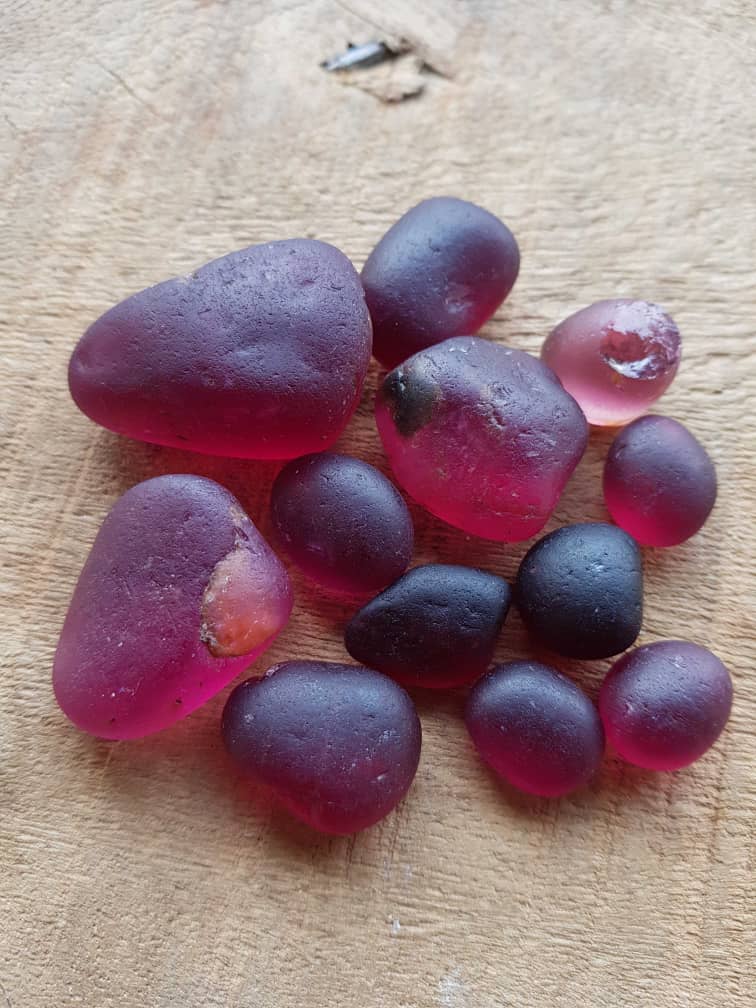
Purple sea glass (also called lavender or amethyst sea glass).
Interested in rare earths and solid minerals from Nigeria? Get vendors +2348056026356
This is not a natural mineral or rock but recycled glass that has been naturally weathered and polished by ocean waves, giving it a frosted, pebble-like appearance. The irregular, tumbled shapes, smooth matte surfaces, and range of purple to pinkish hues (with some clearer or darker variants) are classic indicators of genuine sea glass, distinguishing it from tumbled gemstones like amethyst or fluorite, which would have sharper edges or crystalline structure even when polished.
Value
Purple sea glass is moderately rare compared to common colors like white, green, or brown, making it desirable for jewelry, crafts, and collectors. Its value depends on factors like size (larger pieces are rarer), color intensity (deeper purples fetch more), shape (perfect rounds or hearts are premium), and condition (no chips or bubbles).
- Small pieces (under 1 inch): Typically $1–$5 each.
- Medium pieces (1–2 inches): $5–$15 each, or $10–$20 for bulk lots of 20.
- Rare large or vivid purple specimens: Up to $50–$100 or more; exceptional pieces have sold for £1,000 in auctions.
Prices are higher for certified “genuine” sea glass from reputable sources like Etsy or specialized shops, but raw finds like yours could be valued similarly if authenticated.
Tracing Its Origin on Earth
To trace purple sea glass globally, focus on its historical production and deposition sites. It primarily originates from manganese-containing glass made between the 1880s and 1920s, when manganese dioxide (sourced from Germany) was added to clear glass bottles, jars, and tableware as a de-colorant. Exposure to sunlight over decades oxidizes the manganese, turning the glass purple—most “lavender” pieces started as clear glass from pre-WWI canning jars or ink bottles, while deeper purples come from 1840s–1880s specialty glassware.
Key locations to find or trace it:
– Beaches with historical dumpsites: Fort Bragg’s Glass Beach, California (famous for abundant sea glass from old landfill waste).
– Pebbly, wave-exposed shores: Northern California beaches (e.g., near dark sand for contrast), Ocean City, Maryland (winter/early spring yields many pieces), Hanapepe Bay, Kauai, Hawaii, and Bermuda’s Sea Glass Beach (near cruise ports, with rare purples among commons).
– Global hotspots: Northeast Florida Atlantic coast, UK shores (e.g., English Channel beaches), and any pebbly beach with low tide and historical shipping/industrial activity—search during low tide after storms for fresh turnover.
Environmental Properties and Formation
Sea glass forms through a natural recycling process driven by coastal environmental conditions, turning human waste into art. It requires consistent mechanical and chemical weathering over 7–100+ years:
- Key environmental factors:
- Saltwater immersion: Salt accelerates chemical breakdown by leaching alkali ions from the glass matrix, creating the frosted opacity.
- Abrasive wave action: High-energy waves (e.g., on pebbly or sandy beaches) tumble shards against grit, sand, and rocks, rounding sharp edges into smooth pebbles—needs clean, quartz-rich sand for effective polishing.
- Time and sunlight: Decades of UV exposure oxidize impurities like manganese for color shifts; colder, turbulent waters (e.g., Pacific or Atlantic coasts) speed formation.
- Pollution input: Starts from discarded glass entering via rivers, erosion, or direct dumping—modern decline due to plastic replacing glass.
The process: Glass breaks into shards → Waves bury and roll them in the intertidal zone → Abrasion frosts and shapes them → They wash ashore as treasures. Avoid over-collecting from fragile sites to preserve this ecosystem service, as glass biodegrades slowly (500–1,000,000 years) but doesn’t harm marine life once tumbled.
Colors
Purple sea glass acquires its distinctive color primarily through a process called solarization, where manganese dioxide—added to glass during manufacturing—reacts with ultraviolet (UV) light from the sun over decades of exposure. This was common in glass production from the late 1800s to the early 1900s, when manufacturers used manganese as a clarifying agent to remove greenish tints caused by iron impurities in the raw materials, aiming for clear, colorless glass like bottles, jars, and tableware.
Here’s how it happens step by step:
- Original Production: Clear glass shards started as transparent or slightly tinted pieces containing about 1–2% manganese dioxide. This additive neutralized impurities but wasn’t fully stable under prolonged light.
-
Breakage and Ocean Exposure: Discarded glass enters the sea (via landfills, ships, or rivers), breaks into shards, and begins tumbling in waves, which frosts the surface.
-
UV-Induced Color Shift: Over 20–100+ years, sunlight’s UV rays trigger a photochemical reaction in the manganese ions, oxidizing them and shifting the glass from clear to light lavender or pinkish-purple hues—the longer the exposure, the deeper the color. This is why many pieces appear as “sun purple” rather than intentionally dyed glass.
Deeper, more vivid purples are rarer and often come from intentionally colored glass (e.g., using higher manganese concentrations or other additives like chromium), but the majority of what beachcombers find is this sun-altered variety from everyday items like ink bottles or canning jars. Modern glass lacks manganese, so new purple sea glass isn’t forming the same way.