 ODM Daily Inspirational Devotional Messages Bible Verse and Prayers ODM
#The Assassination of Charlie Kirk: A Tragic Turning Point in American Political Violence
The Assassination of Charlie Kirk: A Tragic Turning Point in American Political Violence
Introduction: A Voice Silenced in the Heart of Campus Debate
On September 10, 2025, the American political landscape was shaken to its core when Charlie Kirk, the 31-year-old co-founder and CEO of Turning Point USA, was fatally shot during a speaking event at Utah Valley University in Orem, Utah. Kirk, a fiery conservative activist known for his unapologetic defense of traditional values, gun rights, and youth mobilization for Republican causes, was struck in the neck by a single, precise gunshot fired from approximately 200 yards away. The incident, captured on video and rapidly disseminated across social media, showed Kirk recoiling mid-sentence, blood gushing from the wound as stunned attendees screamed and fled the scene. What began as a routine stop on his “American Comeback Tour” ended in tragedy, leaving behind a wife, Erika, and two young children, while igniting a national reckoning over the escalating tide of political violence.
Kirk’s death was not merely the loss of a prominent figure; it was a stark reminder of how deeply divided the United States has become. As Utah Governor Spencer Cox described it in a press conference shortly after the shooting, this was “a political assassination” carried out with chilling precision. The shooter, dressed in dark clothing and positioned on a nearby rooftop overlooking the Sorensen Center courtyard, exploited the open-air nature of the event to deliver a fatal blow. As of September 11, 2025, the perpetrator remains at large, with authorities detaining and releasing multiple persons of interest but confirming no arrests in connection with the killing. This article delves into Kirk’s life, the harrowing details of the assassination, the immediate aftermath, and the broader implications for a nation grappling with its demons.
Charlie Kirk: From Suburban Teen to Conservative Powerhouse
To understand the magnitude of Kirk’s death, one must first appreciate the man he was—a self-made influencer who reshaped conservative activism for a digital generation. Born Charles James Kirk on October 14, 1993, in Arlington Heights, Illinois, a suburb of Chicago, Kirk grew up in a middle-class family with a strong emphasis on education and entrepreneurship. He attended Wheeling High School, where he founded the school’s first chapter of the Federalist Society, a conservative legal group, signaling his early interest in politics. By age 18, Kirk had already dropped out of Harper College to pursue activism full-time, co-founding Turning Point USA in 2012 with William Montgomery. The organization, initially a small student group, exploded into a national force, boasting over 3,000 campus chapters and a budget exceeding $100 million by 2025, funded largely through conservative donors.
Kirk’s rise was meteoric. At just 21, he became a key ally to then-presidential candidate Donald Trump, helping to galvanize young voters during the 2016 election. Turning Point USA’s “Professor Watchlist,” which exposed perceived liberal biases in academia, drew millions of views and cemented Kirk’s reputation as a provocateur. He hosted “The Charlie Kirk Show,” a syndicated radio and podcast program that reached over 10 million listeners weekly, where he tackled hot-button issues like immigration, Second Amendment rights, and cultural wars with a blend of sharp rhetoric and unyielding optimism. Kirk was unapologetically pro-life, pro-gun, and pro-America First, often clashing with progressive activists in viral on-campus debates. His marriage to Erika Frantzve in 2021 and the birth of their two children humanized him further, portraying him as a devoted family man amid the chaos of political life.
Yet, Kirk was no stranger to controversy. Critics accused him of promoting divisive narratives, including claims about transgender issues and racial politics that some labeled inflammatory. In 2023, he sparked backlash by suggesting on his show that “Jewish communities have been pushing the exact kind of hatred against whites that they claim to want people to stop using against them.” Despite such moments, Kirk’s influence was undeniable; he played a pivotal role in Trump’s 2024 reelection, mobilizing Gen Z conservatives through social media savvy and high-energy events. By 2025, at the peak of his career, Kirk embodied the youthful vigor of the MAGA movement—a bridge between traditional Republicanism and the digital right.
The Event: A Day of Dialogue Turned Deadly
The shooting occurred at noon during the kickoff of Kirk’s “American Comeback Tour,” a series of campus visits aimed at reigniting conservative enthusiasm post-2024 election. Utah Valley University, a public institution with about 40,000 students, had hosted Turning Point events before, but this one drew heightened attention. A petition signed by over 6,800 students and faculty had circulated online, protesting Kirk’s visit due to his views on issues like LGBTQ+ rights and gun violence. University President Astrid S. Tuminez defended the event, citing First Amendment protections and the value of “free speech, intellectual inquiry, and constructive dialogue.”
The gathering was held in the open-air Sorensen Center courtyard, near the campus food court, with Kirk engaging a crowd of around 200 students and supporters. Eyewitness accounts, including from former Utah Congressman Jason Chaffetz who was present, describe a lively atmosphere. Kirk, microphone in hand, was fielding questions. The first was innocuous—a religious inquiry. The second delved into mass shootings and gun violence: “Do you know how many transgender Americans have been mass shooters over the last 10 years?” the questioner asked. Kirk responded thoughtfully, clarifying whether to include gang violence, when the shot rang out.
Video footage, verified by multiple news outlets, captures the horror in real time. Kirk, seated on a simple chair amid a sea of Turning Point-branded hats and signs, clutches his neck as arterial blood sprays. The crowd’s gasps turn to screams; people duck and run as security personnel rush the stage. Kirk was immediately evacuated by his team and campus police, transported to Timpanogos Regional Hospital in critical condition. Despite emergency efforts, he succumbed to his injuries en route or shortly after arrival, with President Trump confirming the death on Truth Social around 2 p.m. MDT: “The Great, and even Legendary, Charlie Kirk, is dead. No one understood or had the Heart of the Youth in the United States of America better than Charlie.”
The shot’s precision suggests expertise. Utah Department of Public Safety Commissioner Beau Mason described it as originating from a “longer distance,” potentially a rooftop 100-200 yards away, using what witnesses called a “high-powered rifle.” Campus CCTV captured a figure in dark clothing fleeing the area, but the large, open campus complicated the immediate response. SWAT teams locked down the university, and classes were canceled for the week, with President Tuminez expressing shock: “We are shocked and saddened by this unspeakable tragedy.”
The Investigation: A Shooter at Large Amid Confusion
As of September 11, 2025, the manhunt continues. Initial reports suggested a swift arrest: FBI Director Kash Patel posted on X that “the subject for the horrific shooting today that took the life of Charlie Kirk is now in custody,” only to clarify hours later that the individual—a person of interest detained near the scene—had been released after questioning. Utah authorities echoed this, noting two people were briefly held but cleared. Lt. Cameron Roden of the Utah Department of Public Safety stated, “The investigation is ongoing, and we are seeking a new person of interest.” The FBI, coordinating with local law enforcement, has urged tips via a dedicated hotline, emphasizing the “targeted attack” nature of the incident.
Speculation abounds. Some online theories point to political motives, given Kirk’s high-profile Trump ties and recent criticisms of left-wing violence. Others question if it was a professional hit, citing the shot’s accuracy—unlikely for an amateur. No manifesto or claims of responsibility have emerged, and authorities have ruled out immediate ties to campus protesters. The weapon, possibly a sniper rifle like a Ruger American in 6.5 Creedmoor, could have been fired by a novice with basic training, but the distance and fatality suggest intent. Forensic teams are analyzing ballistics, while the FBI probes potential accomplices.
The confusion in early reporting—custody announcements followed by releases—has fueled distrust. Governor Cox vowed accountability, noting Utah’s death penalty: “Those responsible will be held fully accountable. Violence has no place in our public life.” Plainclothes officers and Kirk’s security were present, but the rooftop vantage exposed vulnerabilities in event planning.
Reactions: Bipartisan Condemnation and a Fractured Nation
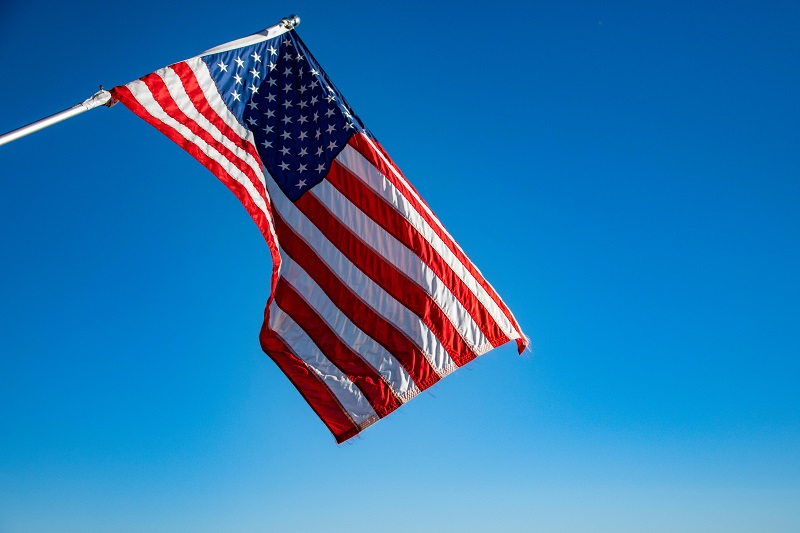
Kirk’s death elicited an outpouring of grief and outrage across the spectrum. President Trump ordered U.S. flags at half-staff until September 14, calling Kirk “loved and admired by ALL, especially me.” Vice President JD Vance posted, “Eternal rest grant unto him, O Lord,” while House Speaker Mike Johnson held a moment of silence in Congress, deeming the act “detestable.” Turning Point USA’s COO, Justin Streiff, announced organizational closure until at least September 15, writing, “Charlie went to his eternal reward with Jesus Christ in Heaven.”
Democrats joined the chorus. House Minority Leader Hakeem Jeffries stated, “Political violence of any kind… is unacceptable and completely incompatible with American values.” Former Presidents Bill Clinton, George W. Bush, and Barack Obama offered prayers, with Clinton urging “serious introspection” on peaceful debate. Even California Governor Gavin Newsom, a frequent Kirk critic, called the attack “disgusting, vile, and reprehensible.” Internationally, Israeli Prime Minister Benjamin Netanyahu mourned a “true friend,” and the Church of Jesus Christ of Latter-day Saints, influential in Utah, condemned the “great sadness” of the event.
Yet, beneath the unity, fissures appeared. Social media buzzed with conspiracy theories—some blaming “the Left,” others questioning if it was an inside job to stoke fear. Far-right voices called for retribution, while a minority celebrated, prompting platform crackdowns. Kirk’s family requested privacy, with Erika issuing a brief statement: “Our hearts are shattered, but Charlie’s legacy will endure.”
Broader Implications: Political Violence as the New Normal
Charlie Kirk’s assassination fits a disturbing pattern of escalating political violence in America. From the 2017 shooting of Rep. Steve Scalise at a congressional baseball practice to the 2024 attempts on President Trump’s life, and more recent incidents like the arson at Pennsylvania’s governor’s mansion or attacks on Minnesota lawmakers, the nation has seen 25 partisan-motivated assaults between 2016 and 2025, per the Center for Strategic and International Studies. Kirk’s killing, occurring just one day before the 24th anniversary of 9/11, evokes historical parallels, such as Al-Qaeda’s 2001 assassination of Afghan leader Ahmad Shah Massoud to pave the way for larger attacks.
This tragedy underscores vulnerabilities in public discourse. Campus events, once bastions of free exchange, now require fortified security, chilling the very debates Kirk championed. It raises questions about gun access—ironically, Kirk’s staunch advocacy for the Second Amendment now juxtaposed against his death by firearm. Mental health, ideological extremism, and online radicalization all play roles, but so does a polarized media ecosystem that amplifies hatred.
Kirk’s death may galvanize conservatives, boosting Turning Point’s mission and youth turnout in future elections. It could also prompt bipartisan pushes for better protection of public figures, though skepticism persists amid partisan divides. As Obama noted, “This kind of despicable violence has no place in our democracy.” Yet, without addressing root causes—rhetoric that dehumanizes opponents, unchecked misinformation—the cycle risks continuation.
Honoring a Legacy, Demanding Justice
Charlie Kirk was more than an activist; he was a catalyst for a generation’s conservative awakening, a husband, father, and unyielding voice for his beliefs. His assassination at Utah Valley University robs America of that voice, but not its echo. As the search for the shooter intensifies, the nation must confront its fractures—not with vengeance, but with resolve to protect discourse and lives. Kirk’s final words, lost mid-sentence, remind us: In a divided land, every voice matters, until silenced forever. May justice come swiftly, and may his family find solace amid the storm. Charlie Kirk’s fight continues through those he inspired—may it lead to a comeback not just for America, but for civility itself.
Charlie Kirk: A Comprehensive Biography of the Conservative Activist and Political Influencer
Introduction: The Architect of Youth Conservatism
Charles James Kirk, better known as Charlie Kirk, was a towering figure in American conservatism, renowned for his role in mobilizing young people toward right-wing causes. Born in 1993 and tragically assassinated on September 10, 2025, at the age of 31, Kirk’s life was a whirlwind of activism, media innovation, and unyielding advocacy for traditional values. As the founder and CEO of Turning Point USA (TPUSA), he built a multimillion-dollar empire that reshaped Republican outreach to Generation Z. His death during a campus speaking event in Utah marked a somber end to a career defined by bold rhetoric, strategic alliances with figures like Donald Trump, and relentless promotion of America First policies. This biography chronicles Kirk’s journey from a suburban Illinois teen to a national powerhouse, exploring his early influences, professional triumphs, personal life, controversies, and enduring legacy.
Early Life and Family Roots
Charlie Kirk was born on October 14, 1993, in Arlington Heights, Illinois, a middle-class suburb northwest of Chicago. He was raised primarily in nearby Prospect Heights by his parents, Connie Kirk, a mental health counselor, and Larry Kirk, an architect. The Kirks provided a stable, supportive environment that emphasized education, community involvement, and traditional American values—hallmarks that would later define their son’s worldview.
From a young age, Kirk displayed a precocious interest in leadership and public service. He joined the Boy Scouts of America as a child and rose to the rank of Eagle Scout, earning numerous badges in areas like citizenship and outdoor skills. This experience instilled in him a sense of discipline and patriotism. Kirk attended Wheeling High School, a public school in the Chicago area, where he excelled academically and extracurricularly. During his junior year in 2010, at just 16, he volunteered for the U.S. Senate campaign of Republican Mark Kirk (no relation), helping with grassroots efforts that contributed to the candidate’s victory. This early foray into politics ignited a passion that would consume his life.
Kirk’s high school years were marked by budding activism. In his senior year, he launched a successful campaign against a proposed price hike for school cookies, demonstrating his knack for mobilizing peers. He also penned an op-ed for Breitbart News, a conservative outlet, accusing high school textbooks of liberal bias—a piece that earned him an appearance on Fox Business Network. These experiences foreshadowed his future as a provocateur against perceived progressive indoctrination in education. Family played a central role; Kirk has often credited his parents for fostering his entrepreneurial spirit and faith, though he kept much of his personal family life private until later years.
Education: A Brief Academic Detour
Kirk’s formal education was unconventional and short-lived, reflecting his prioritization of activism over traditional academia. After graduating from Wheeling High School in 2012, he enrolled at Harper College, a community college in Palatine, Illinois. There, he pursued studies in business and political science but quickly grew disillusioned with the classroom. Influenced by the Tea Party movement, Kirk attended a speaking event at Benedictine University titled “Youth Empowerment Day,” where he met Bill Montgomery, a Tea Party organizer. Montgomery became a mentor, urging Kirk to channel his energy into full-time political organizing.
By 2013, just a semester into college, Kirk dropped out without earning a degree or certificate. He viewed higher education as overly politicized and inefficient, a stance that aligned with his later criticisms of universities. This decision was pivotal; it freed him to focus on building what would become Turning Point USA. Kirk later reflected in interviews that his real education came from real-world campaigning and self-study, often citing books by conservative icons like William F. Buckley Jr. and reading voraciously on economics and history. Despite lacking a formal degree, his intellectual output—through podcasts, books, and speeches—demonstrated a sharp, self-taught mind.
Founding Turning Point USA: Building a Conservative Youth Empire
At the tender age of 18, in 2012, Kirk co-founded Turning Point USA with Bill Montgomery, envisioning it as a conservative counterweight to liberal student groups like MoveOn.org. Headquartered initially in the Chicago suburbs, TPUSA aimed to promote free markets, limited government, and constitutional principles on college campuses. Kirk served as CEO, chief fundraiser, and public face, leveraging his charisma to secure early backing from major donors.
A breakthrough came at the 2012 Republican National Convention, where Kirk met Foster Friess, a prominent Republican philanthropist. Friess’s financial support helped TPUSA expand rapidly, establishing over 3,000 campus chapters by the mid-2020s. Key initiatives included the “Professor Watchlist,” launched in 2016, which publicized academics accused of leftist bias, drawing millions of views and sparking debates on free speech. The “School Board Watchlist” extended this scrutiny to K-12 education.
Under Kirk’s leadership, TPUSA’s budget ballooned. By 2020, revenues reached $39.2 million, with Kirk’s personal salary exceeding $325,000 annually from TPUSA and affiliates. He spearheaded high-profile events like the annual Student Action Summit, attracting thousands of young conservatives. In 2019, Kirk launched Turning Point Action, a 501(c)(4) advocacy arm targeting Democrats, and acquired Students for Trump to mobilize youth for the 2020 election—though Trump’s reelection bid failed, the effort built lasting infrastructure. Post-2020, he founded Turning Point Faith in 2021 to engage evangelical communities, with a $6.4 million budget for pastor outreach, and Turning Point Academy, an online “America-first” school (though a 2022 partnership ended amid controversy).
Kirk’s organizational prowess turned TPUSA into a conservative juggernaut, influencing elections and culture wars. By 2025, it boasted a network of influencers, a robust digital presence, and ties to the Republican National Committee through the Mount Vernon Project, which recruited grassroots leaders.
Political Involvement: From Trump Ally to Administration Advisor
Kirk’s politics were staunchly Republican, with a focus on youth mobilization and anti-establishment fervor. He joined the Council for National Policy (CNP), a secretive conservative group, as the William F. Buckley Jr. Council Member, and served as a spokesperson for its political arm. His big break came in 2016, when he aligned with Donald Trump’s presidential campaign. Kirk addressed the Republican National Convention, assisted with Donald Trump Jr.’s logistics, and participated in pro-Trump events, including a Fox News town hall with the Trump family.
TPUSA’s efforts helped Trump secure young voters in 2016, and Kirk continued this role through 2020 and 2024. Before the 2024 election, his “You’re Being Brainwashed” campus tour debunked progressive narratives, credited with boosting Gen Z turnout for Trump’s victory. Kirk advised on Trump’s transition team, recommending appointees for cabinet and leadership roles. In March 2025, President Trump appointed him to the United States Air Force Academy Board of Visitors, alongside Senator Tommy Tuberville and Dina Powell—a prestigious nod to his rising influence.
Kirk’s activism extended to issues like border security, Second Amendment rights, and opposition to “woke” policies. He criticized COVID-19 lockdowns, election integrity, and transgender rights, often framing them as threats to American liberty. His work with Turning Point Faith emphasized mobilizing religious voters on abortion and religious freedom.
Media Career: Amplifying the Conservative Voice
Kirk’s media savvy propelled him to stardom. In 2019, he began hosting “The Charlie Kirk Show,” a daily three-hour radio program syndicated on Salem Media’s “The Answer” network. By 2024, it garnered 500,000 to 750,000 daily downloads, ranking No. 13 on Apple Podcasts for news. The show blended commentary, interviews, and calls, tackling topics from immigration to cultural decay.
In February 2025, Kirk expanded to television with “Charlie Kirk Today” on Trinity Broadcasting Network (TBN), a weekday talk show. His “Turning Point Live” events targeted Gen Z with high-energy rallies. Online, TPUSA’s platforms drew 111,000 unique monthly visitors in 2021, and Kirk’s personal X (formerly Twitter) account @charliekirk11 amassed over 5.5 million followers by 2025. In April 2024, he joined TikTok, where campus tour videos went viral, some exceeding 50 million views.
Kirk authored books like “The MAGA Doctrine” (2020) and “Right-Wing Revolution” (2022), outlining his vision for conservative renewal. A 2023 Brookings Institution study ranked his podcast second for false and misleading claims among 79 political shows, highlighting his polarizing style. Nonetheless, his reach made him a go-to voice for Fox News, Newsmax, and conservative media.
Controversies: A Lightning Rod for Criticism
Kirk’s career was not without strife. Critics accused him of promoting conspiracy theories, including antisemitic tropes like “Cultural Marxism” and claims that universities were “islands of totalitarianism.” He spread COVID-19 misinformation, falsely touting hydroxychloroquine as a cure and downplaying vaccines. In 2023, he faced backlash for comments on Jewish communities pushing “hatred against whites,” which he later clarified but drew accusations of antisemitism.
TPUSA events often sparked protests; a 2019 Arizona State University speech led to clashes, and the Professor Watchlist was criticized as a “hit list” stifling academic freedom. Financial scrutiny arose over Kirk’s high salary and TPUSA’s spending, including his $855,000 Florida condo. In 2021, he left the Falkirk Center at Liberty University amid disputes. Kirk defended his positions as truth-telling, often suing critics for defamation and framing backlash as leftist intolerance.
Personal Life: Faith, Family, and Philanthropy
Kirk was an evangelical Christian, whose faith informed his activism. He attended nondenominational churches and integrated biblical principles into Turning Point Faith. In May 2021, he married Erika Frantzve, a former Miss Arizona USA (2012), podcaster, and entrepreneur. The couple welcomed a daughter in August 2022 and a son in May 2024. Kirk often shared family glimpses on social media, portraying himself as a devoted husband and father amid his hectic schedule.
He resided in the Phoenix area, with additional properties reflecting his success. Philanthropically, Kirk supported conservative causes, including scholarships via TPUSA and aid for border communities. Health-wise, he maintained fitness through running and weight training, and he abstained from alcohol, citing his faith.
Legacy: A Catalyst Cut Short
Charlie Kirk’s life ended abruptly on September 10, 2025, when he was shot and killed during a speaking event at Utah Valley University. At 31, he left an indelible mark: TPUSA endures as a youth conservative force, his media platforms inspire millions, and his Trump alliances shaped the GOP’s future. Supporters hail him as a visionary who empowered a generation; detractors see a divisive figure. Yet, Kirk’s story—from Eagle Scout to empire-builder—embodies the American dream of youthful ambition. His assassination underscores the perils of political passion, but his legacy of unapologetic conservatism lives on through those he mentored and mobilized. In a fractured nation, Charlie Kirk’s voice, though silenced, continues to echo.